
Getting Back on Track in September: 5 simple foundations to try
September has a way of nudging routine back into place, and if you've had a couple of weeks away from your usual rhythm, or a summer of juggling work, family and childcare, it can be hard to shift back into the swing of things.
There's a lot to love about the summer routine too though - slower mornings, no mad school run, more time with family and friends. But alongside the good bits, you may have had less time to yourself, whilst navigating the daily balancing act of work and family life. You might have teens needing lifts everywhere and keeping you awake with their nocturnal habits, or the constant juggle of work and childcare with younger kids, which can make it hard to stick to the things you do to feel good.
Diet and exercise tend to slip first as work has to happen, and stress can increase as you try to manage everything with a disturbed sleep routine, so it's no surprise September comes with an urge to 'get back on track' - which can mean eating less, cutting carbs, skipping meals, or trying to fix everything at once. We've all tried it!
But what if that boom-or-bust tactic isn't actually the most effective way back to feeling good?
Routine, consistency, and saying no to restriction can get you there in a way that's more sustainable, more enjoyable, and better for your health - especially for women navigating midlife.
Here are the five simple foundations I always come back to, and a bit of the 'why' behind each one.
5 Healthy Foundations
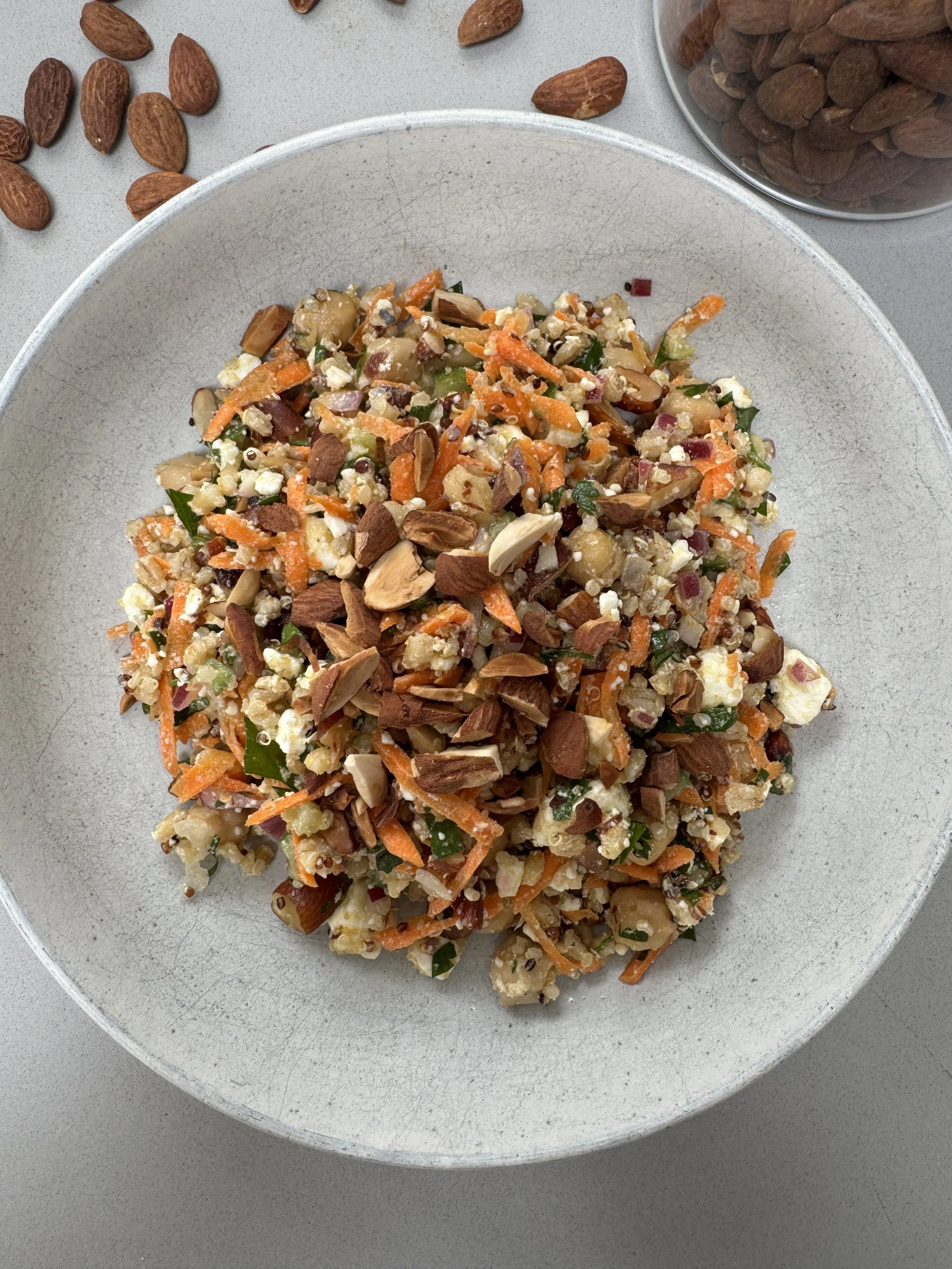
1. Regular meals
Skipping meals to save calories often backfires; by the time you get to dinner, you end up reaching for whatever's quickest, which is rarely the choice you'd make with a clear head.
Eating 3 meals a day at roughly the same times helps keep energy steadier, which in turn makes it easier to make considered choices rather than reactive ones.
→ A high protein, high fibre breakfast is a good place to start - try my Breakfast Pots for 30g of protein and 10g of fibre.

2. Protein, fibre, and plants
Aim for around 30g of protein per meal, at least 30g of fibre a day, and a wide variety of plants - aiming for 30 different types a week. Protein and fibre slow the rate sugar enters your bloodstream, so digestion is slower - keeping you feeling satisfied for longer, with steadier energy along the way [1]. This matters more through peri/menopause: as oestrogen declines, insulin sensitivity can reduce, meaning the body may produce more insulin to compensate - which can encourage fat storage, particularly around the middle [2,3]. Cutting back on alcohol, even just a couple of nights a week, can also help blood sugar balance and sleep, which can support steadier energy and appetite the next day.
→ See my fibre and protein cheat sheets for how to hit your ideal daily targets.
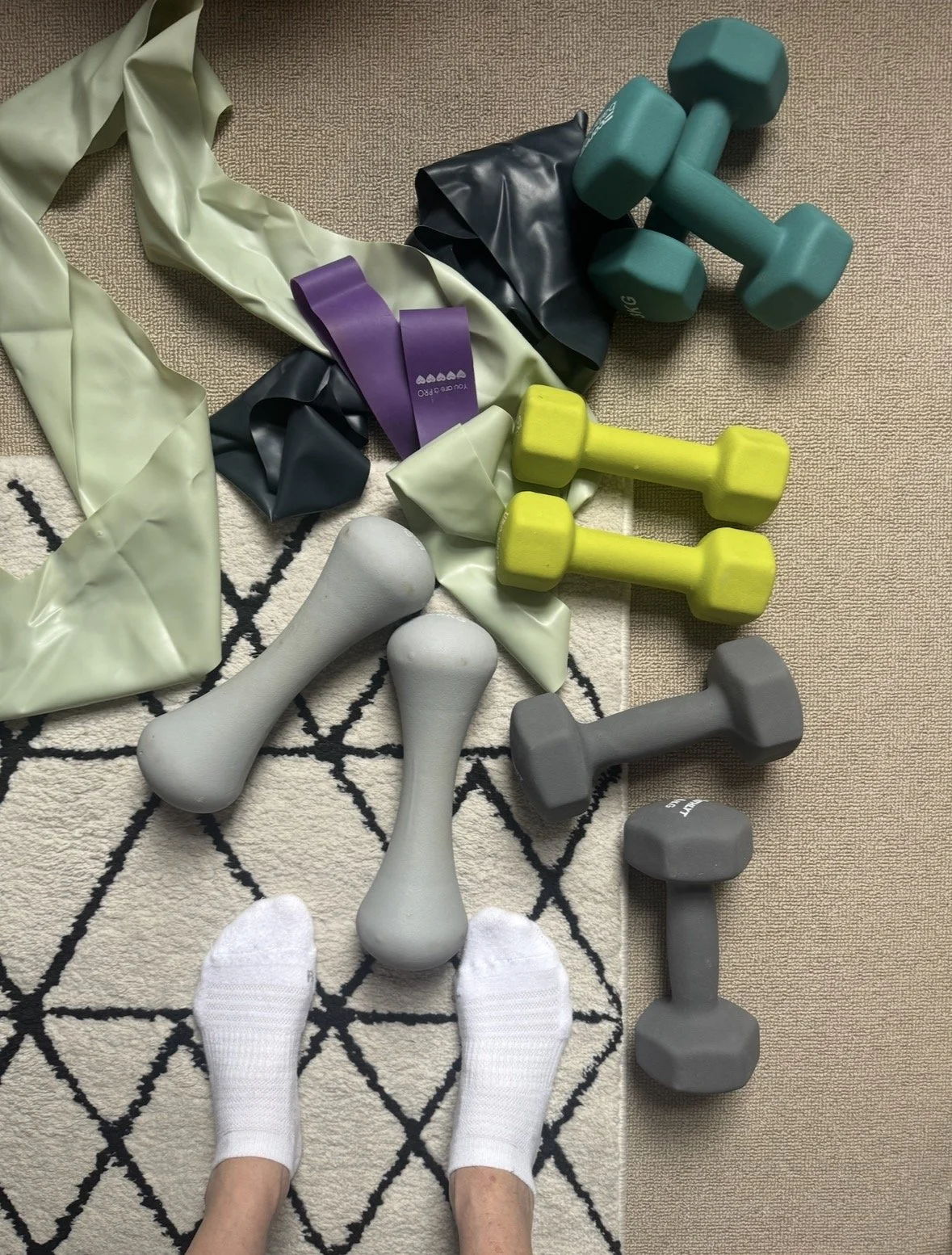
3. Movement, including some resistance work
Strength or resistance training a couple of times a week supports muscle mass, which naturally becomes more important to maintain as we get older - muscle is metabolically active tissue, so having more of it may support a steadier metabolic rate [8-10]. Even just a few squats and light weights, or a workout with a resistance band, is a good starting point - you don't necessarily need a gym membership.
→ If you prefer to work out at home, the Deliciously Ella app has lots of good workouts (plus meditation and breathwork for relaxation) for all levels - it's £27.99 a year, but you can try it free for 7 days to see if it's for you. As always, check with your GP or a qualified trainer before starting a new exercise routine, especially if strength work is new to you.

4. sleep hygiene
Sleep affects appetite, energy and mood more than most people expect. Poor sleep can disrupt the hormones that regulate hunger and fullness, leptin and ghrelin, which may leave you hungrier and less satisfied the next day, and it's also linked to higher cortisol levels, adding to the stress picture above. A consistent wind-down routine is a small change that tends to pay off broadly. → Try the 3-2-1 method:
3 hours before bed: stop eating: digestion close to bedtime can interfere with how well you sleep.
2 hours before bed: stop working - giving your mind time to switch off makes it easier to actually fall asleep,
1 hour before bed: put your phone down: screens suppress melatonin, the hormone that helps trigger sleepiness, so the light itself can delay when you start to feel tired.

5. Managing stress
This is a big one, and probably one of the hardest to improve, as life is often busy and challenging. It can be difficult to get the balance right, especially in midlife, where we may be sandwiched between looking after teens on one side and older relatives on the other.
Stress directly affects the body - when you face a challenge, cortisol is released to help manage the response, including prompting the liver to release stored glucose for quick energy [4]. That's useful occasionally, but when stress is more constant, it may contribute to ongoing blood sugar fluctuations, which can trigger increased appetite and cravings [5,6]. Hormonal changes through the menopausal transition have also been linked to higher cortisol levels, which may make the body more sensitive to stress than it once was [7] - another reason this matters more at this stage of life.
→ A daily walk, a few minutes of slow belly breathing, or a guided practice on an app like Insight Timer can all help take the edge off - it has lots of free sessions; I particularly like Ally Boothroyd's yoga nidras.
If taking on all five at once feels like too much, try one for a couple of weeks, then build gradually - before you know it, you'll have a whole new autumn routine. I hope this helps, and here's to a steadier, more settled September.
Disclaimer
Content shared by Jane Lawson is for informational purposes only and is not intended to diagnose, treat, cure, or prevent any medical condition. It does not replace medical advice. Always speak to your GP or a qualified healthcare professional with any health concerns, and before making changes to your diet, exercise routine, medication, or overall health plan.
If you're experiencing persistent low mood around food, a pattern of restriction and bingeing, or any other symptoms that concern you, please speak with your GP or a registered practitioner.
References
Santoro A, McGraw TE, Kahn BB. Insulin action in adipocytes, adipose remodeling, and systemic effects. Cell Metab. 2021 Apr 6;33(4):748–57.
Erdélyi A, Pálfi E, Tűű L, Nas K, Szűcs Z, Török M, et al. The Importance of Nutrition in Menopause and Perimenopause—A Review. Nutrients. 2023 Dec 21;16(1):27.
Davis SR, Castelo-Branco C, Chedraui P, Lumsden MA, Nappi RE, Shah D, et al. Understanding weight gain at menopause. Climacteric. 2012 Oct 1;15(5):419–29.
Herman JP, McKlveen JM, Ghosal S, Kopp B, Wulsin A, Makinson R, et al. Regulation of the hypothalamic-pituitary-adrenocortical stress response. Compr Physiol. 2016 Mar 15;6(2):603–21.
Vicennati V, Pasqui F, Cavazza C, Pagotto U, Pasquali R. Stress-related Development of Obesity and Cortisol in Women. Obesity. 2009;17(9):1678–83.
Harris RBS. Chronic and acute effects of stress on energy balance: are there appropriate animal models? Am J Physiol - Regul Integr Comp Physiol. 2015 Feb 15;308(4):R250–65.
Woods NF, Mitchell ES, Smith-DiJulio K. Cortisol Levels during the Menopausal Transition and Early Postmenopause: Observations from the Seattle Midlife Women's Health Study. Menopause N Y N. 2009;16(4):708–18.