How to eat 30g of fibre a day
If you’ve ever been told to “eat more fibre” but aren’t quite sure what that looks like in real life, you’re not alone. For many people, fibre intake is lower than recommended, often without realising it, which can affect digestion, energy levels, appetite, and overall health.
This guide is designed to make it easier to understand what 30g of fibre a day actually looks like in practice. Rather than complicated tracking or strict rules, it focuses on everyday foods and simple combinations that can help you gradually increase your intake in a way that feels realistic and sustainable.
Getting enough fibre isn’t just about digestion (although it can support more regular, comfortable bowel movements). It also plays a role in supporting balanced blood sugar, hormone health, and appetite regulation, which can be particularly helpful in midlife when appetite, energy, and weight can get harder to manage.
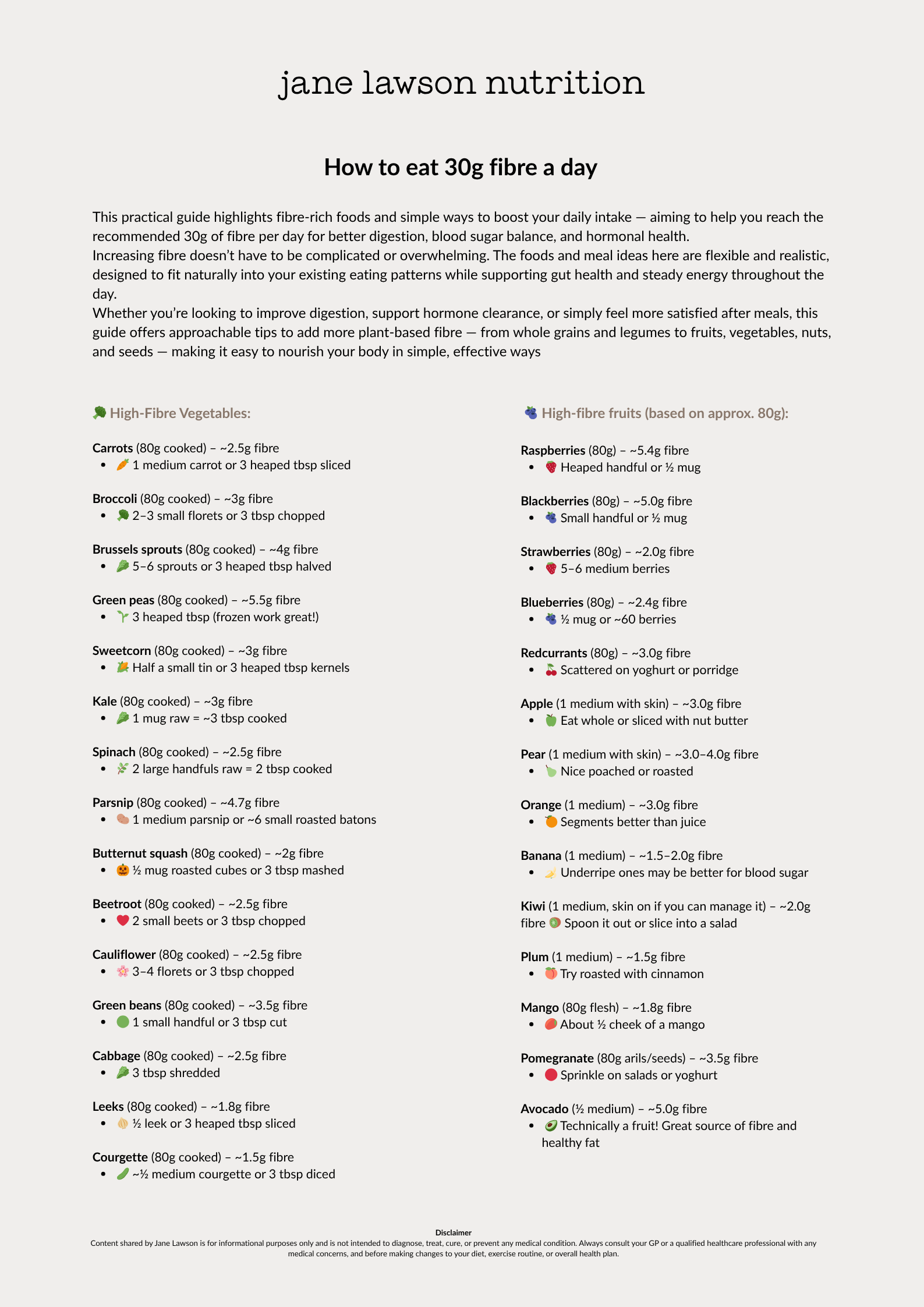
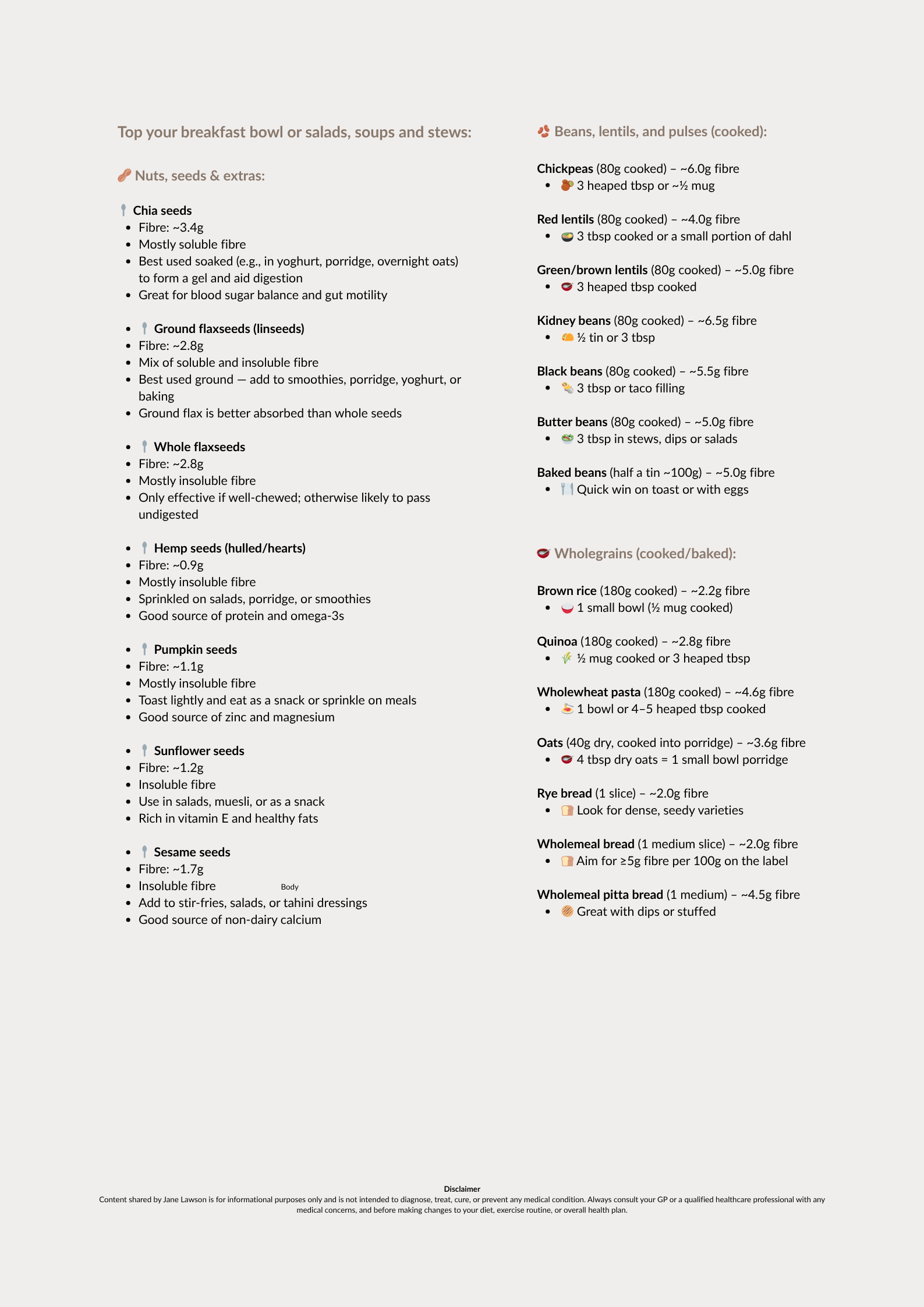
Below, you’ll find a practical fibre cheat sheet with common foods, portion guides, and simple meal ideas to help you build towards around 30g per day. You don’t need to get it perfect, just use it as a reference to see where you are now and where you might gently increase over time.
A quick note on increasing fibre
If your fibre intake has been on the lower side, it’s usually best to increase it gradually rather than all at once, and to drink plenty of fluids alongside this. This gives your digestive system time to adjust and can help reduce symptoms like bloating or discomfort.
If you notice any persistent changes in your bowel habits — such as ongoing bloating, pain, diarrhoea, constipation, or any unexplained changes — it’s important to speak with your GP to have this checked.